
About Us
Our facility is located on the southwest corner of the Ferguson Road and Lakeland intersection, on the opposite corner from the Lakeland Hills post office, and across the street from the Walgreen’s.
In business since 1972, we maintain a state-of-art facility for the diagnosing and treatment of our patients, as well as providing boarding for our companion animals.
We are pleased and proud to show our clients through our Clinic facilities whenever they visit, and encourage visits by the owners when their companions require extended hospital stays.
What causes heartworm disease?
Heartworm disease or dirofilariasis is a serious and potentially fatal disease in dogs. It is caused by a blood-borne parasite called Dirofilaria immitus.
Heartworms are found in the heart and adjacent large blood vessels of infected dogs. The female worm is 6 to 14 inches and 1/8 inch wide. The male is about half the size of the female. One dog may have as many as 300 worms.
read more…
How do heartworms get into the heart?
Adult heartworms live in the heart and pulmonary arteries of infected dogs. They have been found in other areas of the body, but this is unusual. They live up to five years and during this time, the female produces millions of offspring called microfilaria. These mircrfilariae live mainly in the small vessels of the bloodstream. The immature heartworms cannot complete their life cycle in the dog. The mosquito is required for some stages of the heartworm life cycle. The microfilaria are not infective (cannot grow to adulthood) in the dog- although they do cause problems.
As many as 30 species of mosquitoes can transmit heartworms. The female mosquito bites the infected dog and ingests the mircrfilariae during a blood meal. The microfilariae develop further for 10-30 days in the mosquito and then enter the mouthparts of the mosquito. The microfilariae are now called infective larvae because at this stage of development, they will grow to adulthood when they enter a dog. The mosquito usually bites the dog where the hair coat is thinnest. However, having long hair does not prevent a dog from getting heartworms.
When fully developed, the infective larvae enter the bloodstream and move to the heart and adjacent vessels where they grow to maturity in two to three months and start reproducing, thereby completing the full life cycle.
Where are heartworms found?
Canine heartworm disease occurs all over the world. Heartworms are found in most regions of the United States and are worse in the south and southeast regions.
How do dogs get infected with them?
The disease is not spread directly from dog to dog. An intermediate host, the mosquito, is required for transmission. Spread of the disease therefore coincides with mosquito season. The number of dogs infected and the length of the mosquito season are directly correlated with the incidence of heartworm disease in any given area.
It takes a number of years before dogs show outward signs of infection. Consequently, the disease is diagnosed mostly n four to eight year old dogs. The disease is seldom diagnosed in a dog less than one year of age because the young worms (larvae) take up to five to seven months to mature after infection.
What do heartworms do to the dog?
Adult heartworms: Adult heartworms cause disease by clogging the heart and major blood vessels leading from the heart. They interfere with the valve action in the heart. By clogging the main blood vessel, the blood supply to other organs of the body is reduced, particularly blood flow to the lungs, liver, and kidneys from the adult worms and the microfilariae.
The most obvious signs are soft, dry cough, shortness of breath, weakness, nervousness, listlessness, and loss of stamina. All of these signs are most noticeable following exercise, when some dogs may even faint.
In advanced cases, congestive heart failure may be apparent and the abdomen and legs will swell from fluid accumulation. There may also be evidence of weight loss, poor condition, and anemia.
Severely infected dogs may die suddenly during exercise or excitement.
How is heartworm infection diagnosed?
In most cases, diagnosis of heartworm disease can be made by a blood test that can be run in the veterinary hospital. Further diagnostic procedures are essential to determine if the dog can tolerate heartworm treatment.
How can I prevent this from happening to my pet?
Beginning a heartworm prevention program to prevent infections is the best way to prevent heartworm disease. With the safe and affordable heartworm preventives available today, no pet should ever have to endure this dreaded disease.
 |
 |
 |
 |
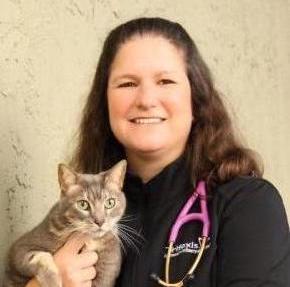
KEN CANTRELL, DVM |
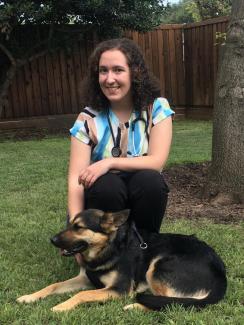
VIRGINIA ELLSWORTH, DVM |
JESICA MARTIN, DVM |
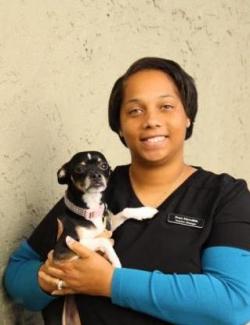
YVETTE PEDROZA, DVM |
Several photographers from the DFW area were gracious enough to allow us to use their photographs on our website. Further information is provided below If you are interested in learning more about the photographers or are interested in scheduling your pet to get their picture taken.
Teresa Berg read more…
Award winning photographer Teresa Berg specializes in pet and family portraiture in the Dallas/Fort Worth area. Her artistic images appear in numerous publications and fine homes across the country. For more information www.teresaberg.com.
Nancy Degenkolb read more…
Today’s Photography for Tomorrow’s Memories – Nancy Degenkolb Photography is based out of Fort Worth, Texas. Nancy travels nationally and abroad catering to distinctive clients world wide. She specializes in Pet photography, Pet Parts photography, family photography and children photography. For more information www.ndegenkolb.com.
Fiona Green read more…
Fiona Green studied photography at Dawson Institute of Photography in Montreal, Canada. As well as regularly contributing to a variety of magazines and books, she recently published her own book, ‘Mewsings’, a collection of photographs with fascinating facts about cats. A passionate animal lover, she devotes much of her spare time to helping our furry friends. As well as fostering homeless cats she co-founded a non-profit organization, AANT (Animal Advocates of North Texas), to help animals in need. For more information www.fionagreenphotography.com.